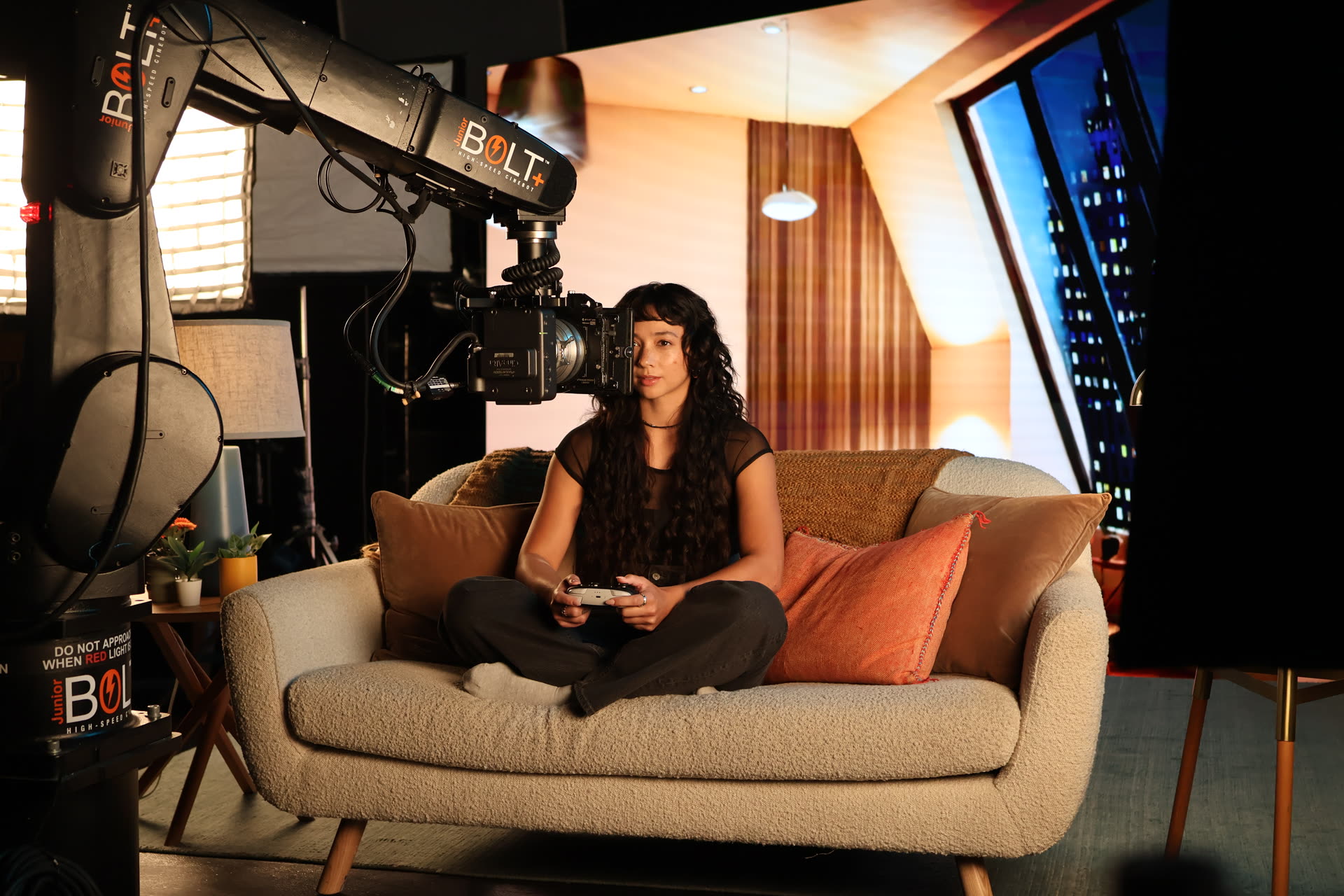
We worked alongside Cinedept at our partner studio in Van Nuys to bring those pieces together and create several different environments without moving the production from location to location.
Building a Bus Inside the Studio
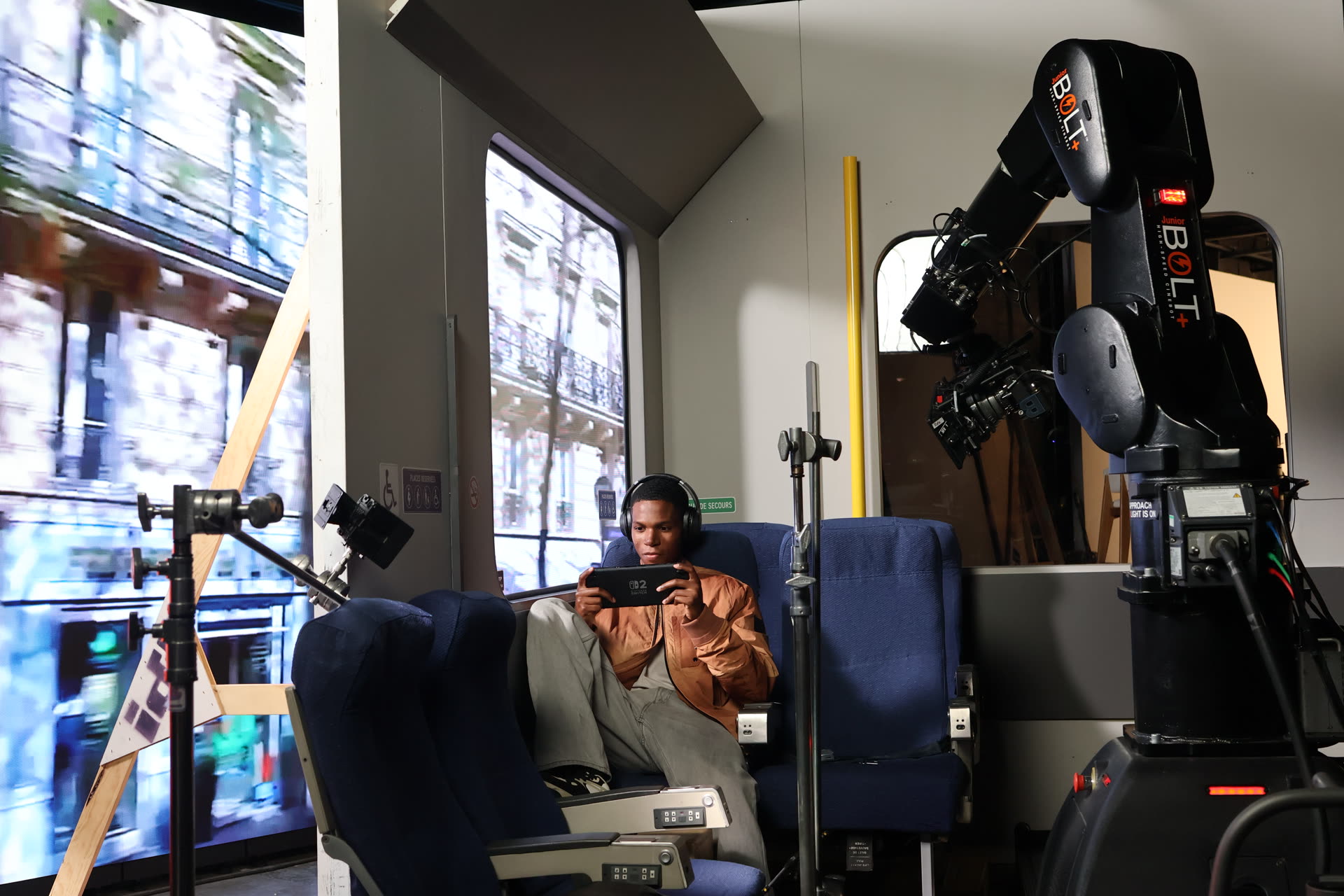
One of the main setups was the interior of a bus. The production design team built the practical bus interior directly in front of our 26' x 10' LED wall, including the seats, walls, windows and other physical elements the talent would interact with.
Everything outside the windows came from the LED wall. Background plates gave the shot a moving exterior while throwing natural light, reflections, and color back into the practical set — a physical foreground with a completely digital world past the glass, and the talent, camera, and set fully controlled inside the studio.
Extending Practical Sets with LED
The bus wasn't the only environment we created this way.
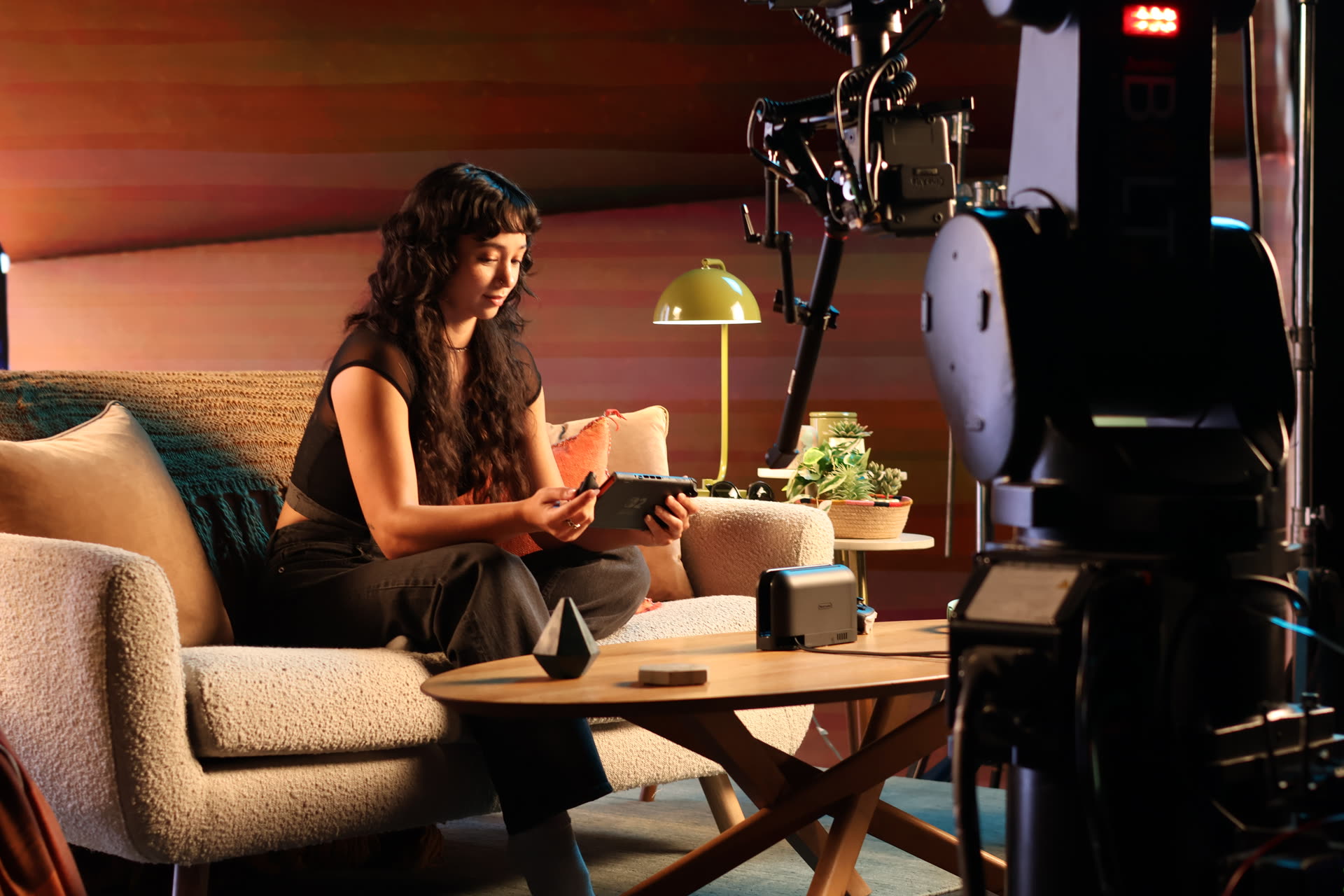
For several interior scenes, the production team built only the practical elements that mattered most to the camera and talent. A couch, table and other foreground pieces established the physical space, while the LED wall completed the rest of the room.
Instead of constructing an entire location, we could build just enough practically and use the LED wall to extend the environment beyond it.
Some scenes used background plates while others took the workflow further with environments running in Unreal Engine.
Connecting Motion Control to Unreal Engine
For the motion control work, Ben Sledge brought in an MRMC Bolt Jr. camera robot.
The robot wasn't only being used to create repeatable camera moves. We also sent tracking data from the Bolt Jr. into Unreal Engine so the virtual camera could follow the movement of the physical camera in real time.
As the robot moved through a shot, Unreal Engine updated the perspective of the environment on the LED wall to match.
That combination gave the production the precision and repeatability of motion control while maintaining the perspective and parallax needed for an in-camera virtual production shot.
Practical Production, Virtual Environments
What we liked about this project was that there wasn't one workflow being forced onto every shot.
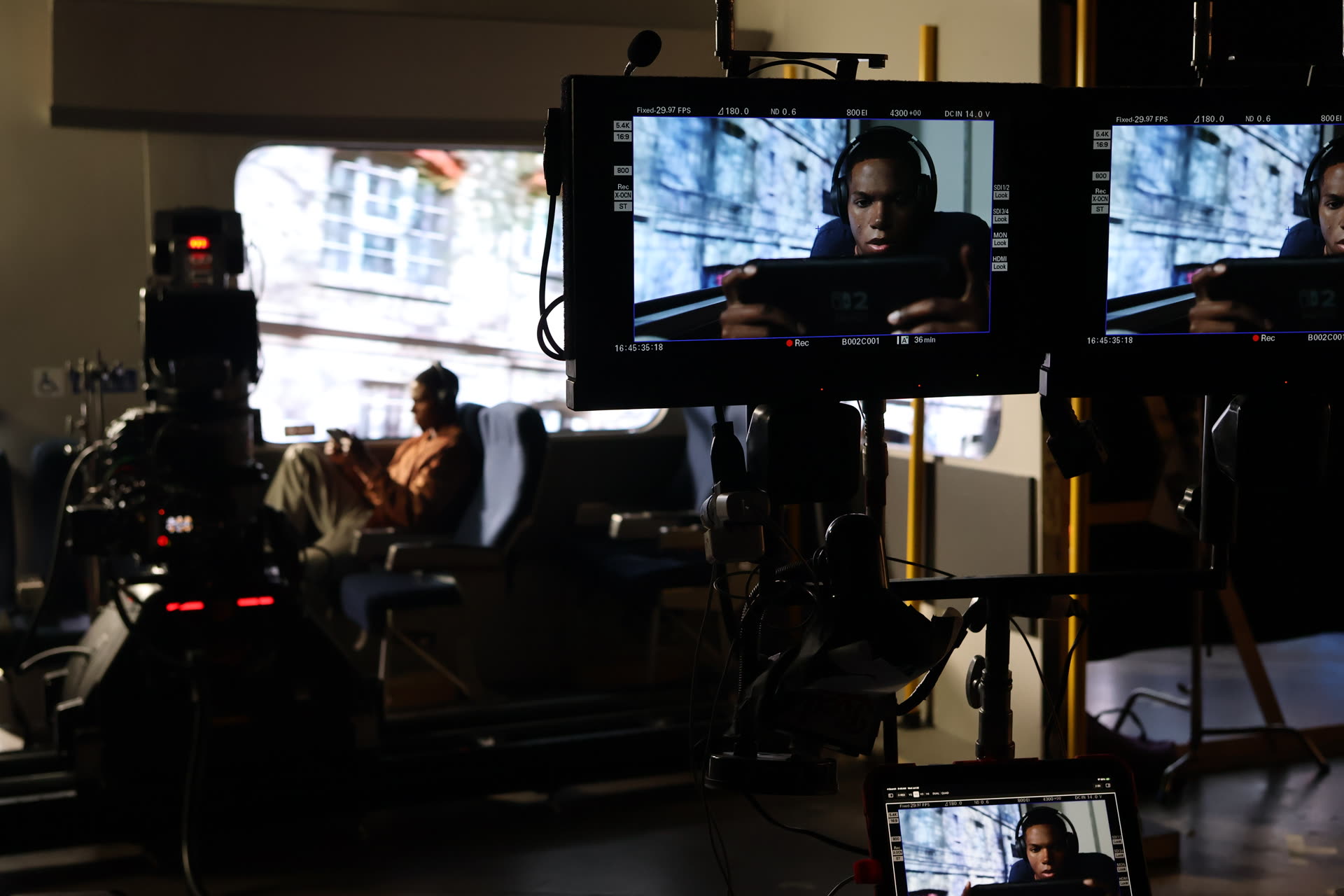
Some shots made sense with background plates. Others benefited from Unreal Engine and real-time camera tracking. Practical set pieces were built wherever physical interaction or foreground detail mattered, and the LED wall handled the parts of the environment that didn't need to physically exist.
Motion control became another piece of that same system.
That’s where virtual production becomes especially useful. It isn’t necessarily about replacing practical production. It’s about having more options for deciding what needs to be physically built, what can live on the LED wall, and how those two worlds can work together in camera.
It isn’t about replacing practical production. It’s about having more options for what gets built, what lives on the wall, and how the two work together in camera.
Form Studios + Cinedept Los Angeles
The project was shot at our Form Studios and Cinedept partner studio in Van Nuys, California.
The stage runs a Unilumin LED volume driven by Puget Systems render nodes, with an Unreal Engine pipeline and camera tracking — the same virtual production setup we run across Form Studios projects around the country.
If you’re planning a spot that needs more locations than the schedule allows, this is the workflow. Tell us what you’re making, or walk the Los Angeles stage.