Any environment. Any time. In camera.
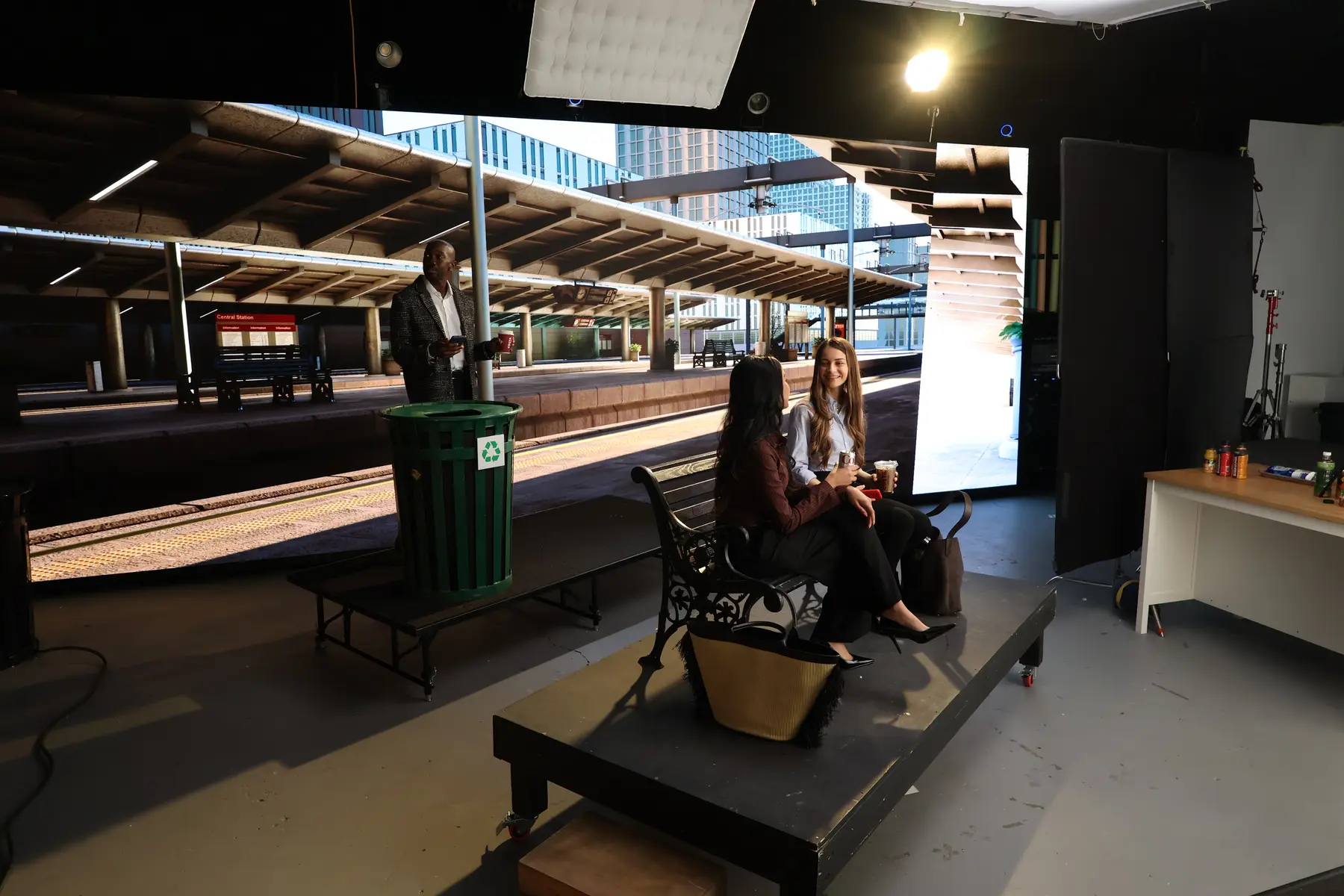
Real-time Unreal Engine environments on LED walls — reflections, lighting, and parallax all captured in camera. See the environment on set and capture more of the finished image in camera.
Recent virtual production
Cinematic campaigns captured in camera on our LED volumes.
Modern Warfare 4
Pre-order trailer for Call of Duty: Modern Warfare 4 on Nintendo Switch 2, directed by David M. Gil for agency Aspect. Virtual production at our Los Angeles stage with Cinedept — live action and motion control combined with real-time Unreal Engine environments captured in camera on the LED volume. Watch how it was shot →
Family Plan
Retail brand spot built around a graduate moving off the family plan. Shot on our Atlanta LED volume with the store environment running live on the wall — a full retail location, no location day and no set build, captured in camera.
Airline of Choice
Cinematic brand campaign for Delta Airlines in partnership with creative agency Heards Creek. Every destination — gates, terminals, skylines — built by our in-house VAD team and captured in camera on our LED volume with real-time Unreal Engine.
Brand Film
Brand film for CAT spanning twelve distinct environments — every world designed in Unreal Engine by our in-house VAD team and captured on our LED volume with motion-control camera moves. No location days, no company moves. Twelve environments, one production schedule, every frame in camera.
Maybach Night Series
Car process shoot for the Mercedes-Benz Maybach Night Series. The car stationary on our LED volume, the world flying past in real-time Unreal Engine — streetlights, skylines, and reflections rolling across the paint live, every pass captured in camera.
Car process & driving scenes.
Available at our Atlanta, Buford, and Los Angeles studios. Keep the vehicle on stage while LED background plate playback or real-time Unreal Engine environments create the impression of travel.
Vehicle interiors
Plan driver and passenger dialogue, singles, and over-the-shoulder shots around the views through each window. Review eyelines and camera positions before committing to coverage.
Driving backgrounds
Match the road, travel direction, and time of day to the scene. Repeat planned background passes for continuity across takes, with performance and playback coordinated on set.
Light & reflections
LED imagery can contribute light and reflections to glass and paint. Test the vehicle, lens package, and practical lighting together to establish the image and any finishing needs.
Prepare the road before shoot day.
Pre-shot driving plates preserve their captured viewpoint and light. An Unreal environment offers more control over the world. Camera movement and the intended coverage determine which approach fits.
Break down the scene
Share the script, boards, vehicle dimensions, lenses, and camera positions. Identify window views, travel direction, and the reflections each shot needs.
Prepare the background
Review plates for viewpoint, speed, resolution, format, and usage rights. Scope new plate capture or custom Unreal scenes separately when needed.
Test the whole image
Check playback, frame rate, shutter, color, focus, moiré, and reflections with the camera package. Agree usable coverage and finishing requirements.
Repeat & refine
Coordinate playback cues with performance and lighting. Review takes on set, adjust the agreed setup, and maintain continuity across coverage.
Can we bring our own driving plates?
Share them for technical and creative review, including usage rights, format, resolution, viewpoint, and intended camera positions. A plate test helps establish usable coverage.
Can the camera move with video plates?
A video plate has a fixed captured perspective; a camera move does not generate new parallax. Limited moves may work for a tested shot. A tracked 3D environment may be a better fit when perspective changes matter.
More control on set.
LED virtual production for commercials, automotive work, film, and television. Plan around the image you need to capture.
Hold the right light
Build the scene around your schedule. Review lighting and environment changes on the wall before the next take.
Capture reflections in camera
LED environments contribute light and reflections to cars, glass, and talent, reducing the need for background replacement.
Keep the crew in one place
Shoot several planned environments on a controlled stage, with virtual art and technical support throughout production.




How a VP shoot works
From first call to final delivery, here is what a virtual production engagement looks like at Form Studios.
Consult & Scope
- Creative brief and technical review
- Script breakdown and shot planning
- Budget alignment and stage selection
- Timeline and deliverables defined
Pre-Production
- Virtual art department builds environments
- Virtual location scouting in Unreal Engine
- Pre-visualization of camera moves and lighting
- Stakeholder review and approval before shoot day
Production
- On-set UE artist and VP supervisor
- Real-time environment control and adjustments
- In-camera VFX captured live
- Multiple environments shot in a single day
Wrap & Delivery
- Footage reviewed and selects pulled on stage
- In-camera backgrounds reviewed for any finishing needs
- Color pipeline managed from wall to deliverable
- Faster turnaround from wrap to air
A Gaussian-splat scan of the real stage — the same spatial capture we play back on the wall. Look around before you book.
We build the worlds
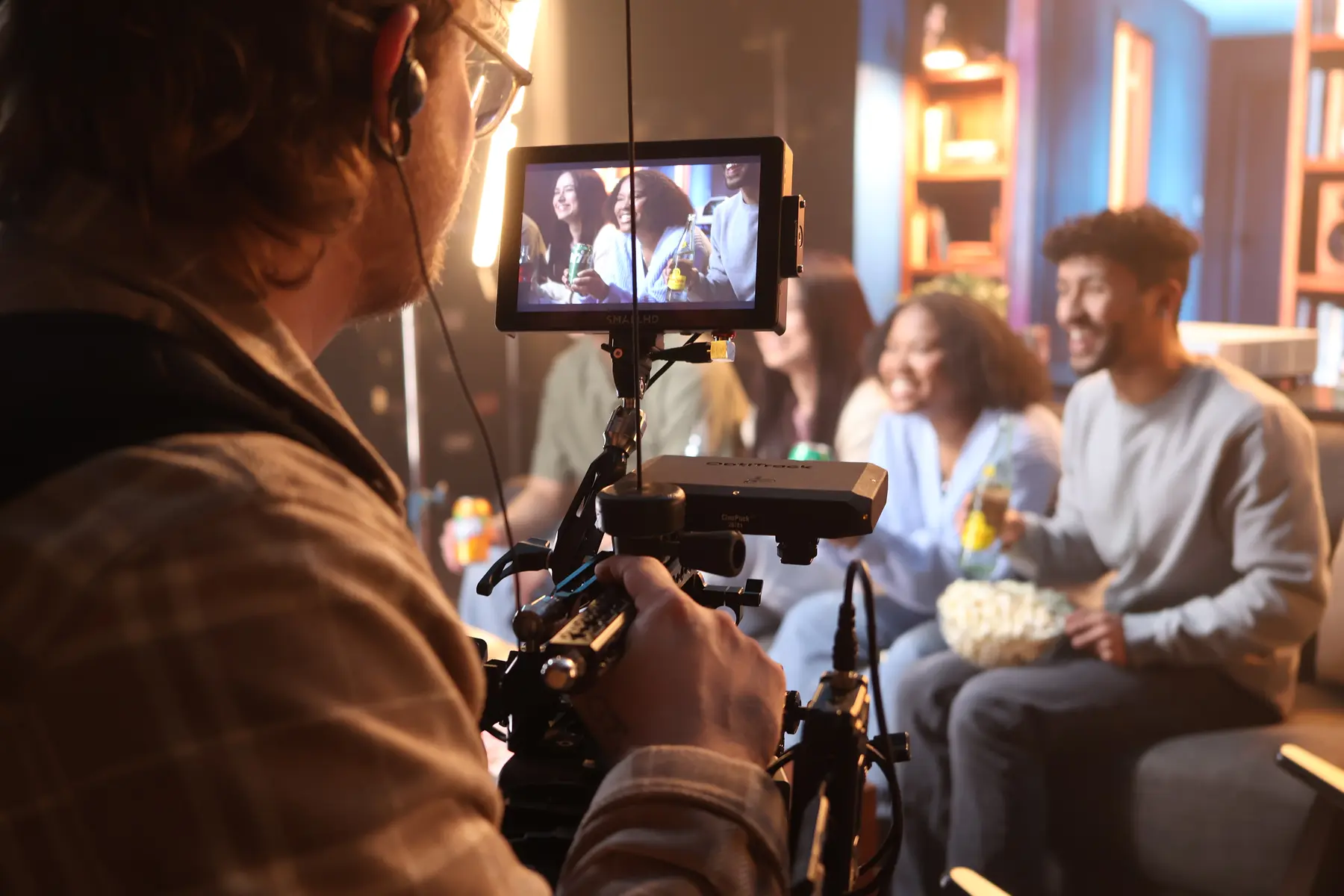
Our virtual art department builds and adapts Unreal Engine environments, prepares captured locations, and plans how each scene will work on the LED volume.
Environment Design
Our VAD team designs and builds custom Unreal Engine 5 environments from concept through final optimization. Art direction, modeling, texturing, and lighting handled internally.
Spatial Scanning
Multi-camera photogrammetry rig captures real-world locations as high-fidelity Gaussian splats. We scan, process, and optimize for LED volume playback.
Virtual Location Scouting
Walk through environments before shoot day. Directors and DPs review camera angles, lighting setups, and compositions inside the engine — no travel required.
Live On-Set Operation
A certified Unreal Engine artist is on set for every shoot. Real-time adjustments to lighting, weather, set dressing, and camera framing as the director calls for them.
Asset Library
Growing library of production-ready environments, materials, and lighting setups. Accelerates builds and reduces costs for common location types.
Multi-Format Delivery
We prepare content for any playback scenario — plates formatted for media servers, spatial scans optimized for real-time rendering, UE environments packaged for nDisplay.
Choose the right environment.
Camera movement, creative flexibility, and preparation time determine the approach. We help select and test the content before shoot day.
Prepared for the camera.
The LED wall, tracking, playback, and camera package are tested together for the planned shots.
LED & rendering
Fine-pitch LED panels driven by Unreal Engine and nDisplay. Panel configuration, camera settings, and testing help manage moiré and banding.
Tracking & synchronization
Camera position data drives perspective-correct backgrounds, with synchronized playback and render systems.
Color & operation
A calibrated color workflow and on-set technical team support environment changes, camera review, and the agreed finishing pipeline.
Common questions
LED volumes, in-camera VFX, and virtual production — answered.
What is an LED volume?
An LED volume is a large, high-resolution LED wall — often wrapped with a ceiling — that displays photoreal, real-time Unreal Engine environments behind your subject. The camera captures the background in-camera with correct lighting, reflections, and parallax, reducing the need for green screen and background compositing. Finishing requirements depend on the shot. Form Studios runs fine-pitch (2.6mm) LED volumes across our Atlanta, Buford GA, and Los Angeles stages — and builds walls to a production's spec when a project calls for more.
What's the difference between virtual production and green screen?
Green screen lets you replace the background in post. An LED volume displays the environment on set, contributing interactive light and reflections that the camera can capture. The right approach depends on the shot, camera movement, and finishing requirements; we can help plan either workflow.
What is in-camera VFX (ICVFX)?
In-camera VFX is the technique of capturing visual-effects environments directly in-camera on an LED volume instead of adding them in post. The engine renders a perspective-correct background tracked to the camera in real time, helping the camera capture the environment and its interaction with the subject. Some shots still require compositing or other finishing.
Can you shoot car process work on the LED wall?
Yes. We regularly run car process shoots — including the Mercedes-Benz Maybach Night Series — with the vehicle stationary on the volume and the world moving in real-time Unreal Engine: streetlights, skylines, and reflections rolling across the paint live and captured in-camera.
How much does it cost to shoot on an LED volume?
Cost depends on stage size, crew, environment build, and shoot length. Our volumes are mid-size stages built to be more accessible than the largest feature-film volumes, and every VP shoot includes a VP supervisor and a certified Unreal Engine artist. Contact us for a quote scoped to your shoot.
Do I need to know Unreal Engine to shoot here?
No. Every virtual production shoot includes a certified Unreal Engine artist and a VP supervisor. We build and adjust the environments live and operate the technology — you direct the shoot.
Building an LED virtual production studio of your own?
Form Volumes installs the same LED walls, render stack, and camera tracking we run on our stages — for studios, brands, and universities ready to bring VP in-house.
Visit Form Volumes