A Performance Worth Looking Closer At
Recall is our new short film created in partnership with FACEGOOD to help launch their P3 stereoscopic head-mounted camera system. FACEGOOD asked us to put the P3 to the test, and we built a production around it.
Form Studios handled the project from pre-production through final delivery, bringing together our cinematics, motion capture and facial capture, animation, and compositing services. Every stage served the same goal: carrying the actors’ performances into digital characters and giving those performances the cinematography and finish they deserved.
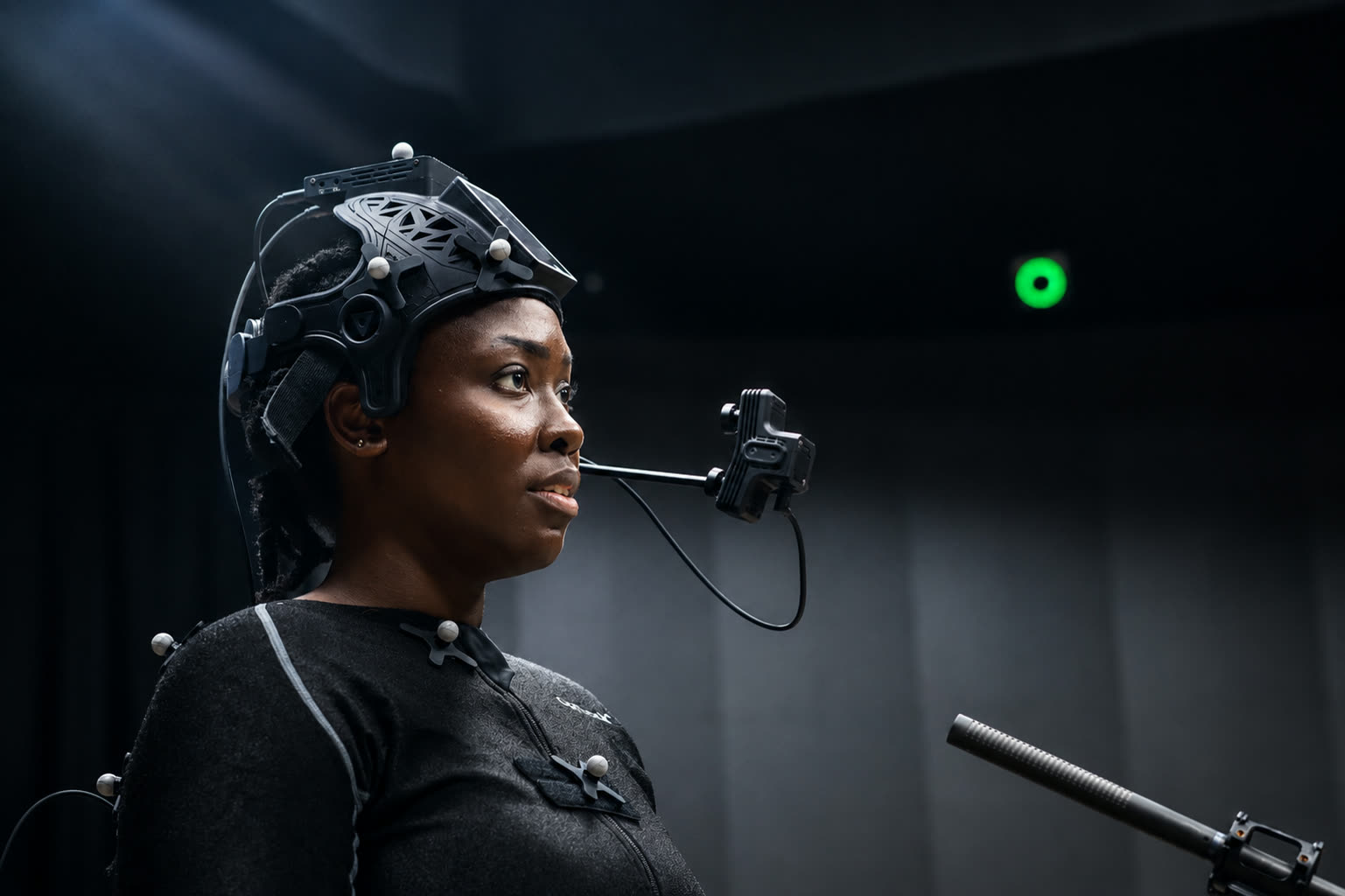
Capturing the Full Performance
For a story centered on a character losing his grip on reality, the small details matter. Facial tension, a hand gesture, or a change in posture can carry as much weight as dialogue.
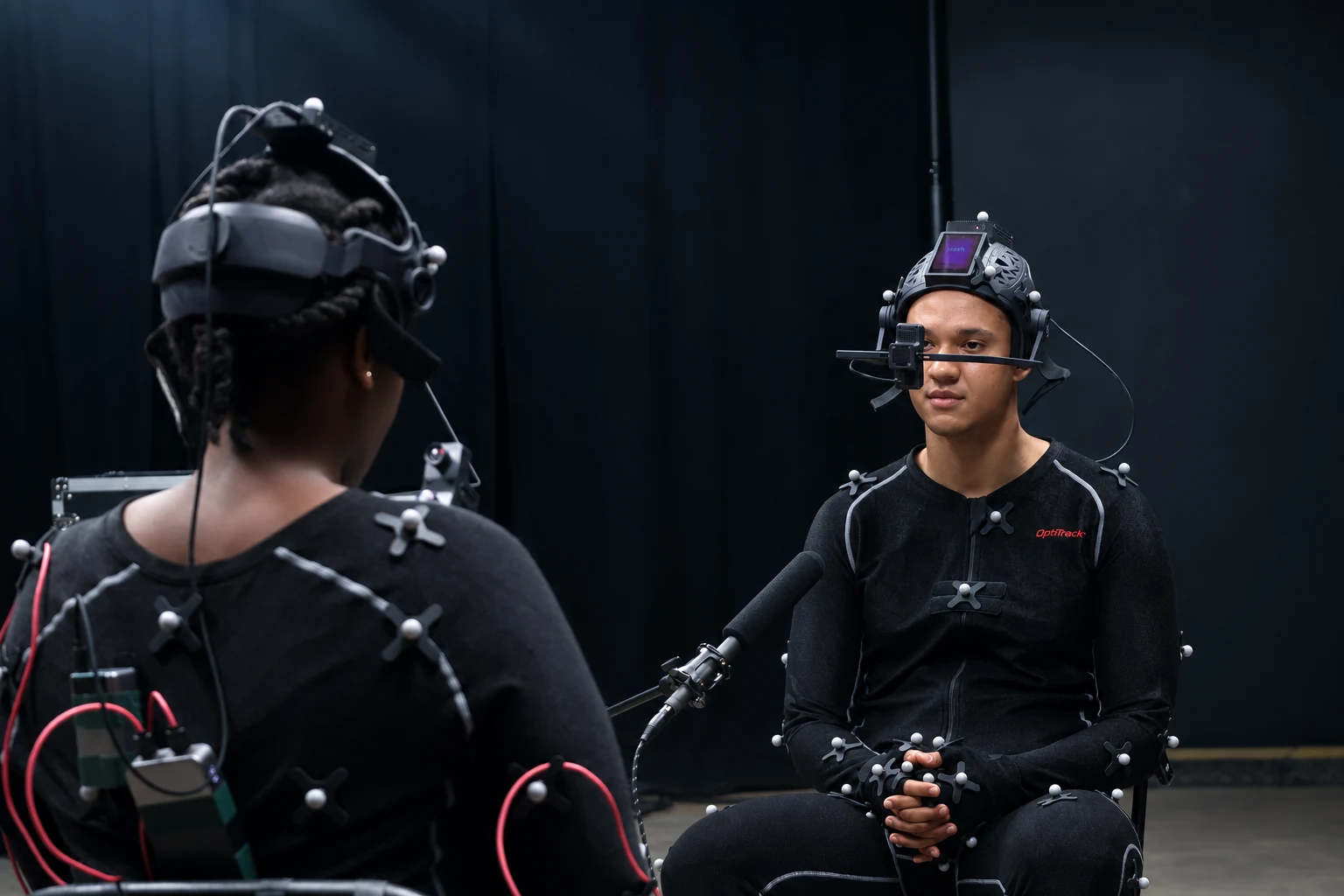
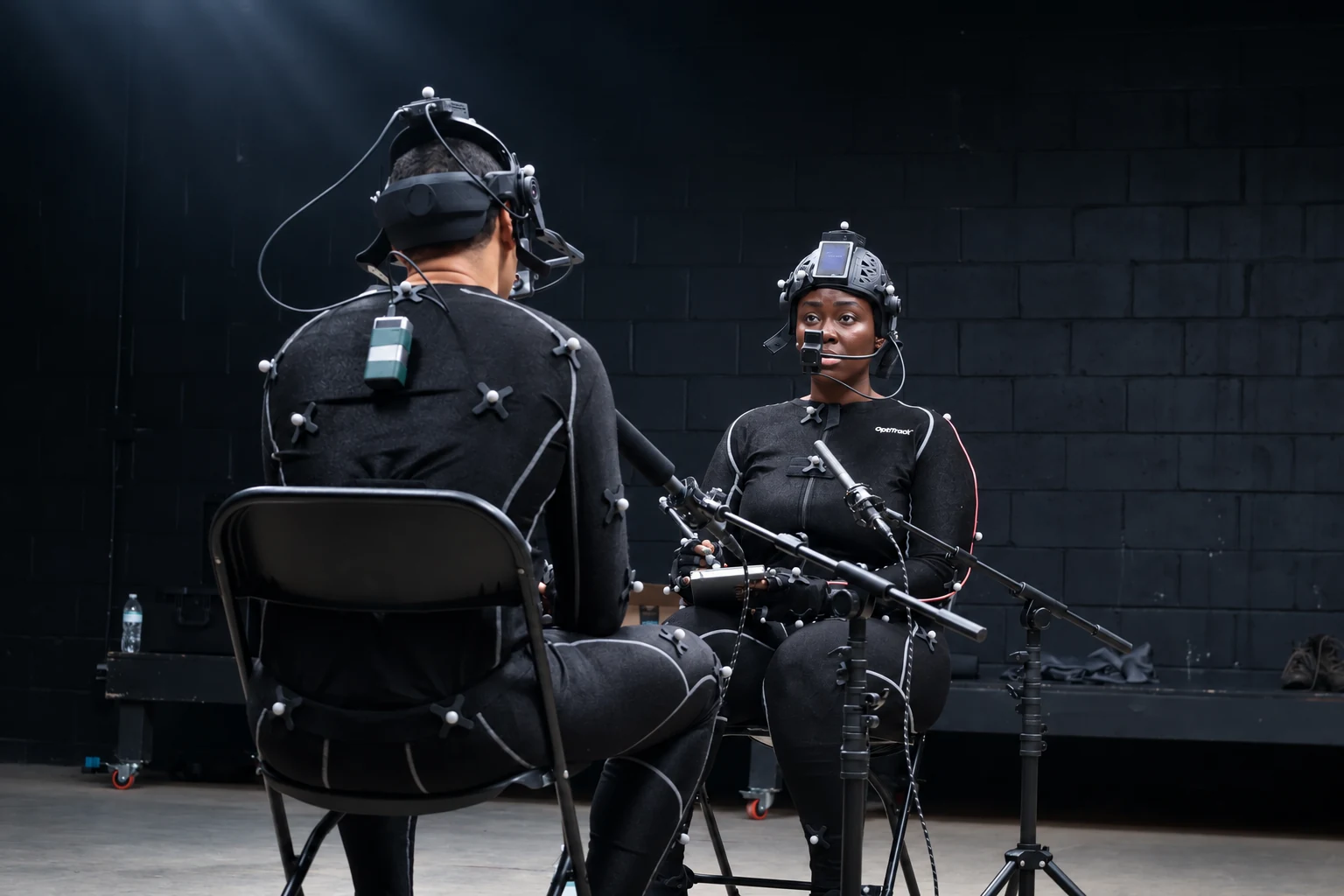
OptiTrack
Optical motion capture provided the actors’ body movement and physical performances.
Rokoko Smartgloves II
Hand and finger tracking carried the detail of each gesture into the digital characters.
FACEGOOD P3
Stereoscopic head-mounted cameras captured subtle facial expressions and the actors’ overall facial performances.
Together, these systems gave us the body movement, gestures, and facial performances that would drive the film’s characters. The P3 captured the subtle expressions that were especially important to a story unfolding in the close quarters of a therapy session.
Bringing the Actors into Unreal Engine
We performed head scans of each actor to carry their likeness into high-fidelity MetaHuman characters. Those characters connected the faces of our cast with their captured performances.
Inside Unreal Engine, we brought the body, hand, and facial capture data together and applied it to the MetaHumans. Our animation team then refined the performances within the scenes, carrying the work from capture into finished character animation.
Having the actors’ likenesses and performances in the same workflow gave us a consistent foundation as we moved into lighting and cinematography.
Shaping the Film Through Cinematography
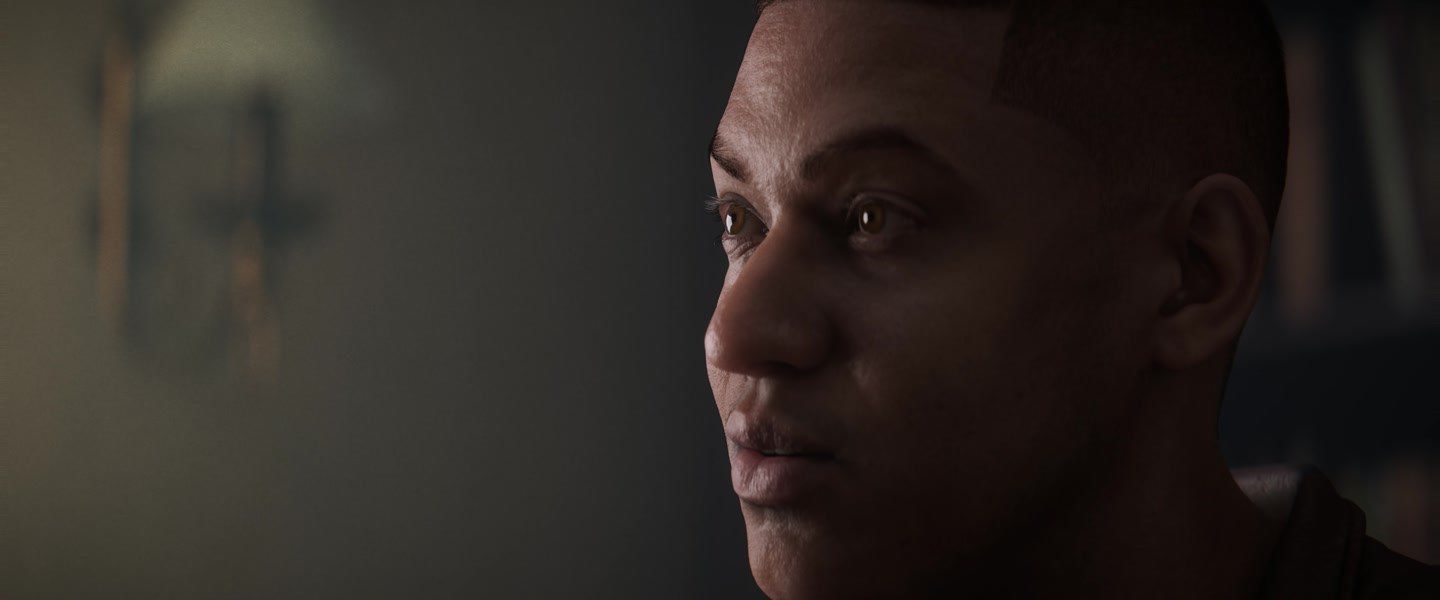
With the performances in place, our team made a dedicated cinematography pass, dialing in camera angles, framing, and lighting for each shot.
We used Lumen for real-time lighting in Unreal Engine, shaping the light around the characters and refining it alongside the cameras. That let us evaluate how a performance read within the composition: what the audience could see, where their attention went, and how closely the camera brought them into the scene.
VFX & Compositing Breakdown
Once the shots were ready, we rendered them out of Unreal Engine and brought them into Nuke for compositing. This was where we applied depth of field, chromatic aberration, motion blur, and other lens effects, alongside color grading.
These finishing decisions helped establish a consistent photographic look across the film. The completed shots then moved into the final edit, where music and sound design brought the visual work together into the finished short.
Watch the raw renders become finished shots in this breakdown, with before-and-after comparisons showing how compositing shapes the final image.
A Complete Cinematics Production
Recall brings our services together in one project: pre-production, actor scanning, full performance capture, character animation, lighting, cinematography, and compositing. It shows the work we can carry from the capture stage to the final frame—and the attention we give to the performance throughout that process.
If you’re developing a game cinematic, an animated short, or a project that calls for believable digital characters, talk to Form Studios about your production.
Bring P3 Facial Capture into Your Studio
For teams building their own capture workflow, our sister company, Form Volumes, is a reseller of the new FACEGOOD P3 HMC units. Reach out through Form Volumes to learn more.